Weather affects nearly every organization—but not all weather information leads to better decisions.
The difference between knowing the forecast and acting with confidence is weather intelligence. This guide is designed to help decision makers turn weather from a background risk into a strategic advantage.
What this guide covers:
- What weather intelligence actually means—and what it doesn’t
- How context, confidence, and timing shape decision outcomes
- Why more data doesn’t automatically lead to better decisions
- How organizations across industries apply weather insight operationally
- How to build a resilient, weather‑aware decision process
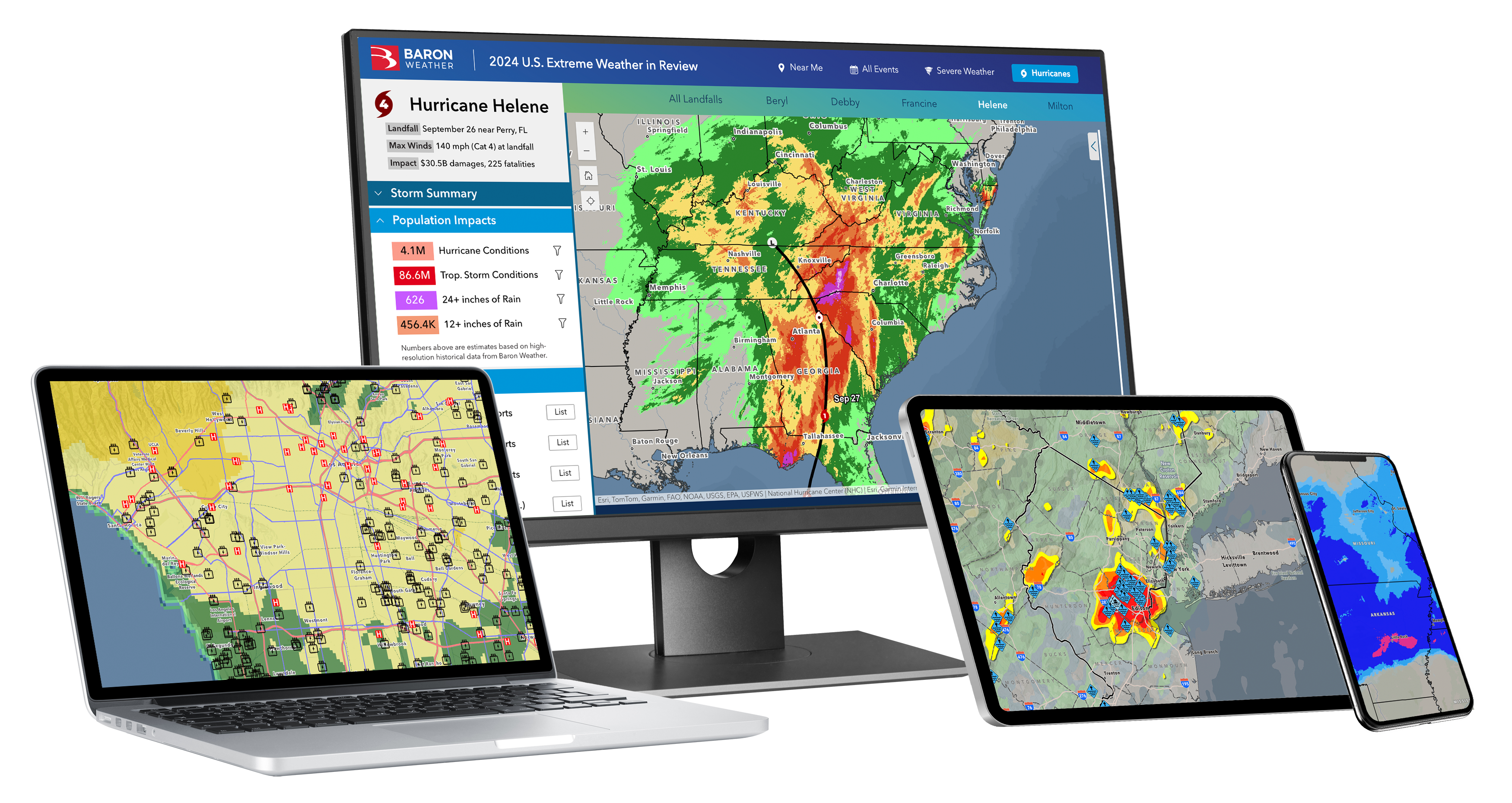
What Is Weather Intelligence?
Weather intelligence is the ability to translate weather data into confident, timely, and actionable decisions.
It goes beyond raw forecasts, radar imagery, or alert feeds. True weather intelligence combines:
- High-quality weather data
- Operational context (who is impacted, where, and how)
- Decision thresholds tied to real‑world outcomes
- Clear communication that enables action
In short: weather intelligence answers the question, “What does this actually mean for us—and what should we do about it right now?”
What Weather Intelligence Is Not
- Just more data or higher‑resolution models
- A single forecast or weather app
- Generic alerts without operational relevance
- Information delivered too late to act
Without context and confidence, even the most accurate forecast can fail to drive the right decision.
Not all weather data is actionable. The difference lies in how insight is contextualized, timed, and delivered to decision‑makers.
Learn More: What Makes Weather Data Actionable?
The Three Pillars of Effective Weather Intelligence
1. Context: Why the Weather Matters Here
Weather only becomes meaningful when it’s tied to specific assets, people, and operations.
Context answers questions like:
- Which locations are exposed?
- What thresholds actually disrupt operations?
- Who needs to know—and what action are they responsible for?
For example, a 40‑mph wind forecast means very different things for:
- A broadcast tower
- A power utility line crew
- An airport runway
- A public safety response team
Weather intelligence embeds weather data directly into the operational environment—connecting forecasts to consequences.
In practice, organizations often solve this by mapping weather thresholds directly to assets, locations, or roles—for example, tying wind speeds to tower safety limits, precipitation rates to runway operations, or lightning proximity to outdoor event protocols.
2. Confidence: Trusting the Decision Window
Confidence isn’t about certainty—it’s about understanding risk well enough to act.
Decision‑makers need clarity around:
- How likely is the event?
- How severe could the impacts be?
- How much lead time is truly available?
Probabilistic guidance, impact‑based thresholds, and expert interpretation all contribute to confidence. When teams trust the insight, they act earlier—and with greater alignment.
Many organizations support this by using ensemble modeling, probability-based forecasts, or decision-support tools that quantify risk rather than relying on a single deterministic forecast.
3. Timing: Insight Delivered When It Still Matters
Perfect information delivered too late is useless.
Weather intelligence prioritizes:
- Early signal detection
- Escalation as confidence increases
- Clear triggers for action
The goal isn’t constant alerts—it’s the right insight at the right moment, aligned to real operational decision points. This is why many teams integrate weather insights directly into operational workflows—by using escalating alerts, decision windows, or workflow triggers that occur as confidence increases.
Why More Weather Data Doesn’t Always Mean Better Decisions
Modern organizations have access to unprecedented volumes of weather data. Yet decision paralysis is increasingly common.
Common challenges include:
- Conflicting model guidance
- Alert fatigue
- Unclear ownership of decisions
- Data that isn’t aligned to operational thresholds
For example, decision-makers may be presented with dozens of model outputs, radar layers, and alert streams—each technically accurate, but none clearly tied to a decision. Without prioritization, teams hesitate or delay action. Additionally, when everyone sees everything, no one knows what to act on.
Weather intelligence simplifies rather than overwhelms. It filters noise, highlights relevance, and focuses attention on what truly matters.
Better decisions come from better framing—not more charts. Forecasts alone don’t drive action—foresight does. The organizations that outperform don’t just monitor weather; they anticipate impact and plan accordingly.
Explore how leading teams do this in Turning Forecasts into Foresight.

How Weather Intelligence Is Applied Across Industries
Public Safety & Emergency Management
- Anticipating impact zones before storms arrive
- Aligning staffing and resources to evolving risk levels
- Communicating clear, actionable guidance to the public
Broadcast & Media
- Providing impact‑driven storytelling, not just forecasts
- Increasing viewer trust during high‑impact events
- Supporting on‑air confidence with real‑time intelligence
航空
- Managing convective weather and winter operations
- Reducing delays through better planning windows
- Improving safety and efficiency for crews and passengers
Energy & Utilities
- Pre‑positioning crews ahead of outages
- Understanding restoration risk and timelines
- Protecting infrastructure from severe weather threats
Enterprise & Commercial Operations
- Protecting employees and physical assets
- Managing supply‑chain disruptions
- Aligning business continuity plans with weather risk
Across industries, the pattern is consistent: organizations that operationalize weather insight outperform those that simply monitor it.
Building a Weather‑Aware Decision Process
To move from data consumption to intelligence‑driven decisions, organizations should focus on five core steps:
- Define operational thresholds — what actually triggers action
- Map weather risks to assets and roles
- Establish decision ownership and escalation paths
- Integrate weather insight into existing workflows
- Continuously refine based on outcomes
Weather intelligence is not a one‑time implementation—it’s a living capability that improves every event.
Want to Go Deeper?
- What Makes Weather Data Actionable? — A breakdown of the signals, thresholds, and context that turn weather data into decisions
- Turning Forecasts into Foresight — How organizations move earlier, plan better, and reduce risk through weather intelligence
The Future of Weather Intelligence
As weather becomes more volatile and operations more complex, intelligence—not information—will define resilience.
The organizations that succeed will be those that:
- Move earlier
- Act with confidence
- Communicate clearly
- Learn from every event
战胜天气,保证人员安全和业务生产。