Weather affects every organization, but not every organization uses weather information the same way. Most teams monitor the weather. The highest-performing teams anticipate it. The shift from forecast awareness to operational foresight is where weather intelligence delivers its greatest value.
Forecasts Describe Conditions, Foresight Delivers Context
A standard forecast answers: “What is expected to happen?”
Foresight answers the far more operational question: “How will this impact my people, assets, and operations?”
Where forecasts provide atmospheric information, foresight adds:
- Impact prediction tied to real-world thresholds
- Location-specific risk context
- Understanding of decision windows and lead time
- Clarity around who needs to act — and when
This connection between conditions and context is what transforms organizations from reactive to resilient.
Foresight Gives Data Operational Meaning
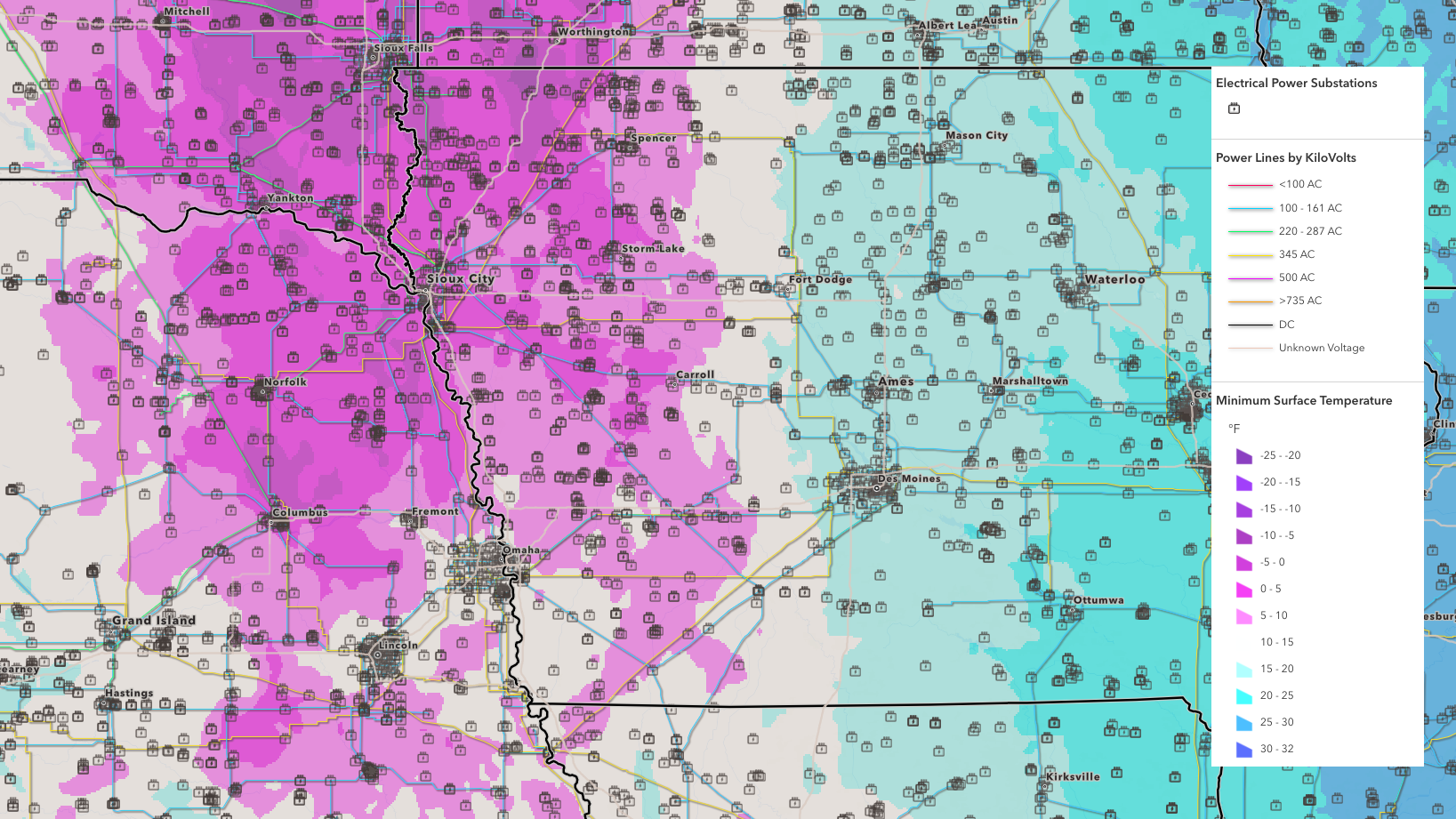
Organizations that rely solely on standard forecasts often find themselves reacting to weather rather than preparing for it. A foresight-driven approach shifts that mindset — helping teams anticipate impacts, allocate resources efficiently, and act before disruptions occur. And since modern operations already juggle a constant flow of information — assets, sensors, workflows, and service demands — weather insight must integrate seamlessly into that environment to be truly effective.
Foresight encompasses:
- Impact models and risk indices that highlight when conditions become meaningful
- Automated alerting that flags changing conditions in advance
- Context-rich visualizations that show what’s at risk and where
- Integration with internal systems and GIS platforms
With this approach, weather isn’t just an external factor — it becomes a core part of planning and decision-making.
During convective weather events, foresight is understanding how storm threats, motion, and timing are evolving. Indicators like hail potential, damaging wind risk, or tornado likelihood — combined with storm direction and estimated time of arrival — provide earlier insight into when impacts may occur. Baron’s Storm Intel product brings these signals together, helping organizations anticipate storm threats and likely arrival windows up to 60 minutes in advance.
Timing Is the Difference Between Awareness and Advantage
Knowing a storm is coming is useful. Knowing when conditions become disruptive is a strategic advantage. As weather volatility increases, even small delays can carry significant consequences. Foresight emphasizes the ability to:
- Reposition crews ahead of storms
- Adjust schedules, staffing, fleet routes, or field operations
- Mitigate risks to infrastructure and assets
- Communicate confidently with customers and stakeholders
- Align decisions to precise operational timelines
That difference becomes clear when you look at how specific weather signals evolve. In heavy rain scenarios, foresight means looking beyond totals to understand rainfall rate, duration, and where saturated areas are most vulnerable. Baron's Flash Flood Risk product highlights locations that have recently experienced very heavy rain and are likely to see dangerous flash flooding develop in the next two hours, offering earlier insight into where conditions may deteriorate rapidly.
This shift moves weather from a reactive challenge to a source of strategic advantage — strengthening resilience while protecting people, infrastructure, and revenue.
How Leading Organizations Use Foresight
Across industries, foresight consistently helps teams anticipate impacts sooner, coordinate more effectively, and respond with greater confidence.
Public Safety & Emergency Management
Identify impact zones earlier, escalate guidance clearly, activate warming centers as needed, and mobilize resources with confidence.
Utilities & Energy
Predict outage risk, pre-position crews, and safeguard critical infrastructure.
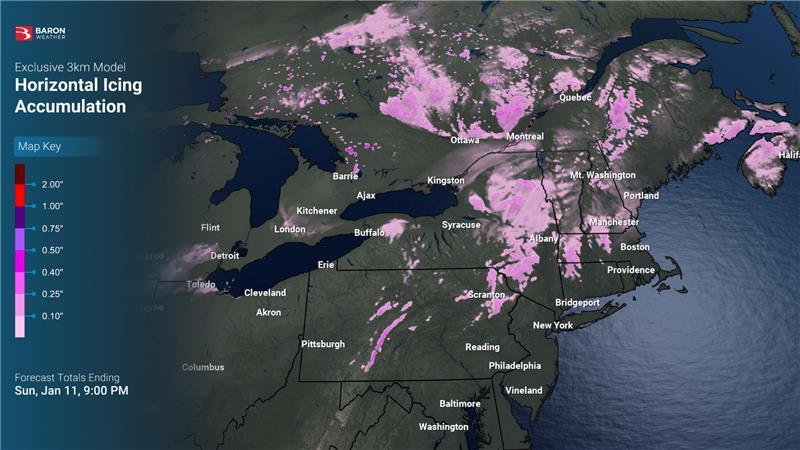
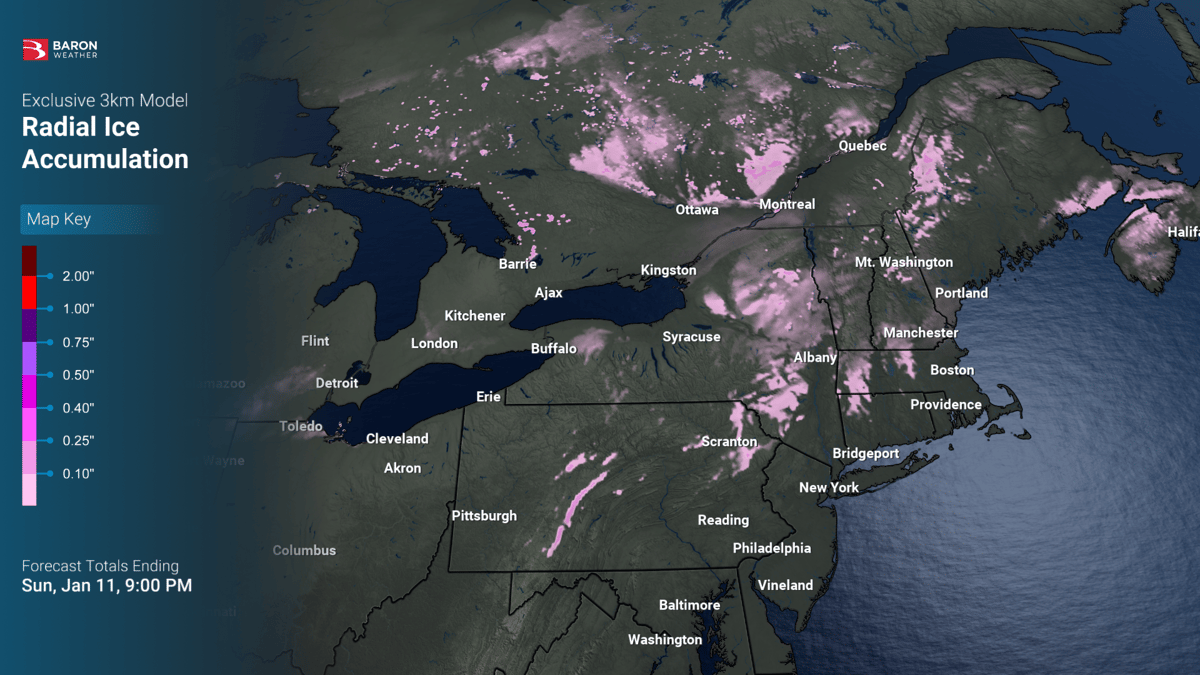
During ice events, foresight means looking beyond totals to understand how icing acts in different environments. Horizontal icing highlights surface-level travel hazards, while radial icing reveals vulnerability on elevated infrastructure like power lines and trees. Together, these perspectives explain why impacts can shift quickly and unevenly — even within the same region.


Aviation
Manage convective threats, optimize planning windows, and support safer, more efficient operations.
Transportation & Enterprise Operations
Avoid disruptions, protect employees, and align business continuity plans with evolving risk.
Foresight Is the Next Step in Weather Intelligence
Forecasts will always be essential, but forecasts alone do not drive action. Foresight does.
By connecting weather insight to operational context, confidence, and timing, organizations move from simply monitoring conditions to anticipating impact and preparing accordingly.
As the weather becomes more variable and operations more complex, foresight will define organizational resilience. The value isn’t in constant updates or alerts, it’s in the right information delivered in time to change the outcome.
The weather will always hold uncertainty. Your decisions don’t have to.
For a deeper look at how organizations turn weather information into a strategic advantage, see The Complete Guide to Weather Intelligence.